
By Zonda Economics | Builderonline.com (abridged)
Who is shopping for new homes today? That’s becoming an increasingly important question as builders navigate a market shaped by elevated mortgage rates, affordability challenges, and shifting demographics. While young families remain a core customer base, NewHomeSource data suggests they’re no longer the main audience driving online shopping activity.
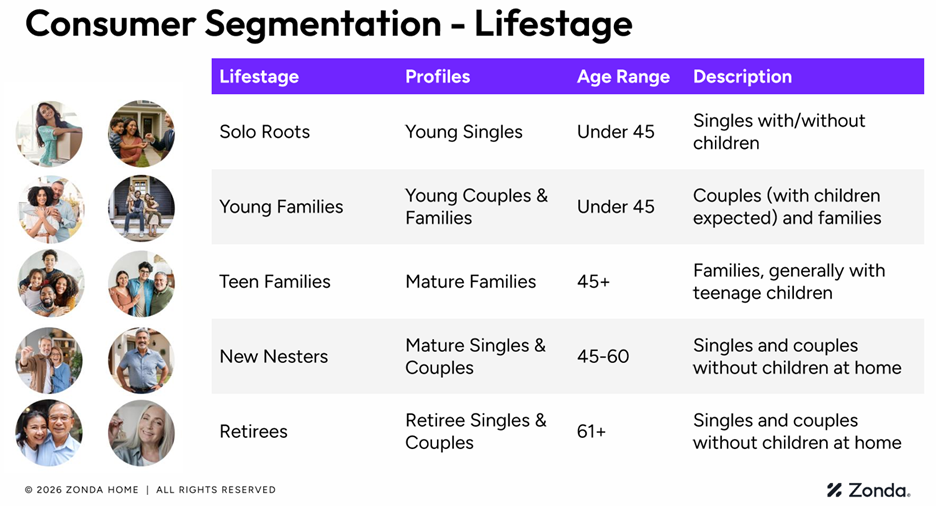
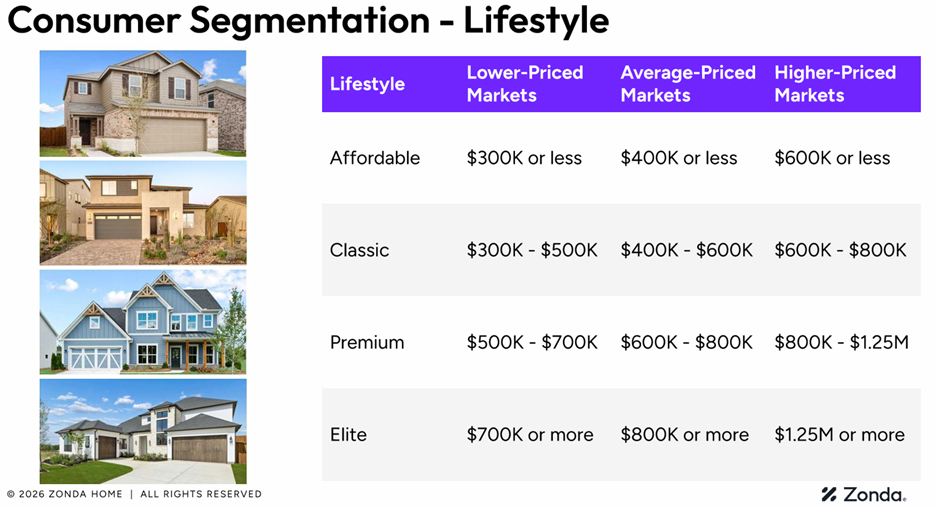
Zonda’s latest Homebuyer Outlook introduces a new consumer segmentation framework that combines lifestage and lifestyle preferences to better understand today’s shoppers. Combined, this model groups consumers into 20 segments based on age, household profile, and the price range of homes they’re viewing, providing builders with a more detailed picture of who is engaging with new home listings.
 Retirees and Solo Shoppers Account for a Large Share of Activity
Across the top 50 housing markets during the second quarter of 2026, retirees generated 29% of all NewHomeSource shopping activity, while solo roots shoppers accounted for another 27%.
Looking at the more detailed segments, which include home price preferences, classic retirees represented the single largest shopper group at 11% of all activity, followed closely by classic solo roots at 10%. Affordable retirees and affordable solo roots also ranked among the most active segments.
Price, defined as lifestyle in the consumer segmentation model, remains one of the clearest themes across every life stage. Classic and affordable shoppers accounted for nearly 70% of all online activity during the quarter, underscoring the continued importance of attainable price points as economic uncertainty prevails and as interest rates remain elevated. Rather than concentrating only on entry-level buyers, affordability is influencing shopping behavior across a broad range of household types, from first-time buyers to retirees.
See more (subscriber content)
Some stories may only appear as partial reprints because of publisher restrictions.