
On April 28, the Scottsdale REALTORS Fair Housing Symposium revealed what keynote Dr. Stephen Berrey called the “hard history” of sundown towns that existed throughout thousands of U.S. communities.
Berrey directs the Sundown Towns Project which documents towns and suburbs that historically excluded minorities after dark. He began his presentation with a 1959 photo of Elijah “Pumpsie” Green, the first black ballplayer for the Boston Red Sox.

Pumpsie Green became the first black player for the Boston Red Sox in 1959. (Harold Filan/Associated Press)
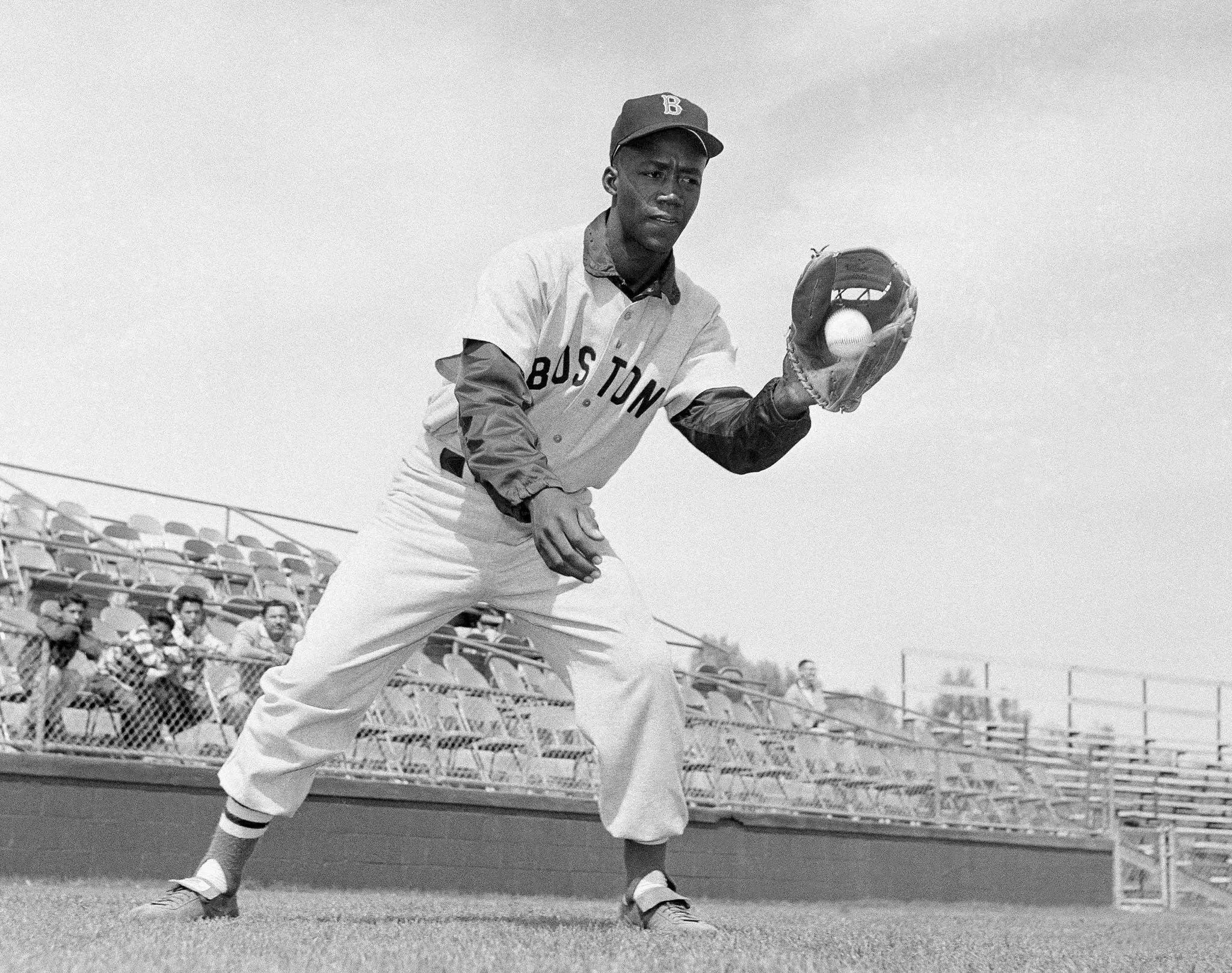
What does Pumpsie have to do with Scottsdale?
“In 1955, the Red Sox signed Pumpsie and assigned him to the minor league,” said Berrey. “In 1959, he gets invited to Spring Training, gets invited to play at the Scottsdale Stadium.” All of the players stayed in the Safari Hotel, except Pumpsie Green. The Red Sox told him that all the rooms were full, so he had to stay 17 miles away in Phoenix.
“His exclusion from this hotel wasn’t an isolated incident,” Berrey added. “It was because he was African American that he couldn’t spend the night in Scottsdale. That is the description of a Sundown Town, and it wasn’t just Scottsdale. There’s evidence that Tempe briefly excluded Native Americans from living in the town, there was an actual ordinance passed.
“A lot of the ways a place could remain a Sundown Town is related to control over access to housing,” Berrey said. “Most, if not everybody in this room is familiar with restrictive covenants that say you can’t sell your property to a particular group, or you can only sell to some groups.”
He then shared a 1924 restrictive covenant from Tempe that read in part: “Said premises, nor any part thereof, shall ever be conveyed, transferred, let or demised to any person or persons of African, Japanese, Chinese, Indian or Mexican descent.”
Sharing hard stories
Berrey also shared newspaper stories about U.S. Air Force Capt. Alfred Daniels and Dr. Clarence Laing, both Black Americans. In 1962, Daniels tried to buy a home in Tempe but before he could sign, neighbors pressured the seller to back out of the deal. After moving to Arcadia, Laing was threatened by white supremacists and suffered injuries defending his home in 1969.
City of Tempe Mayor Corey Woods, who was moderating this symposium for the third time, said his father still carries a Mason jar in his car. When traveling with his grandparents in the Deep South, Woods’ father didn’t know where they could safely go to the bathroom. “There’s still something in the back of his head that says, ‘I need to have these sorts of precautions just in case I go somewhere and it’s not hospitable to people who look like me.'” said Woods.
“My parents remember seeing segregated bathrooms,” volunteered Kurt Nishimura, board director for Scottsdale REALTORS® and past president of the Asian Real Estate Association of America. “They didn’t know which bathroom to use because they’re not black or white.”
Berrey asked in closing, “What do we do now? It might be about things like this symposium, about bringing together important people, people who make decisions, and people who are on the front lines. Whether you’re a real estate agent or involved in making housing policies, you are playing a central role in who can be in your communities.”
Dr. Stephen Berrey is an associate professor of American Culture and History at the University of Michigan. He is the author of “The Jim Crow Routine” and co-author of the upcoming “Black Song: A Manifesto for Music and Justice”.
Related: Leveling Up for Fair Housing